
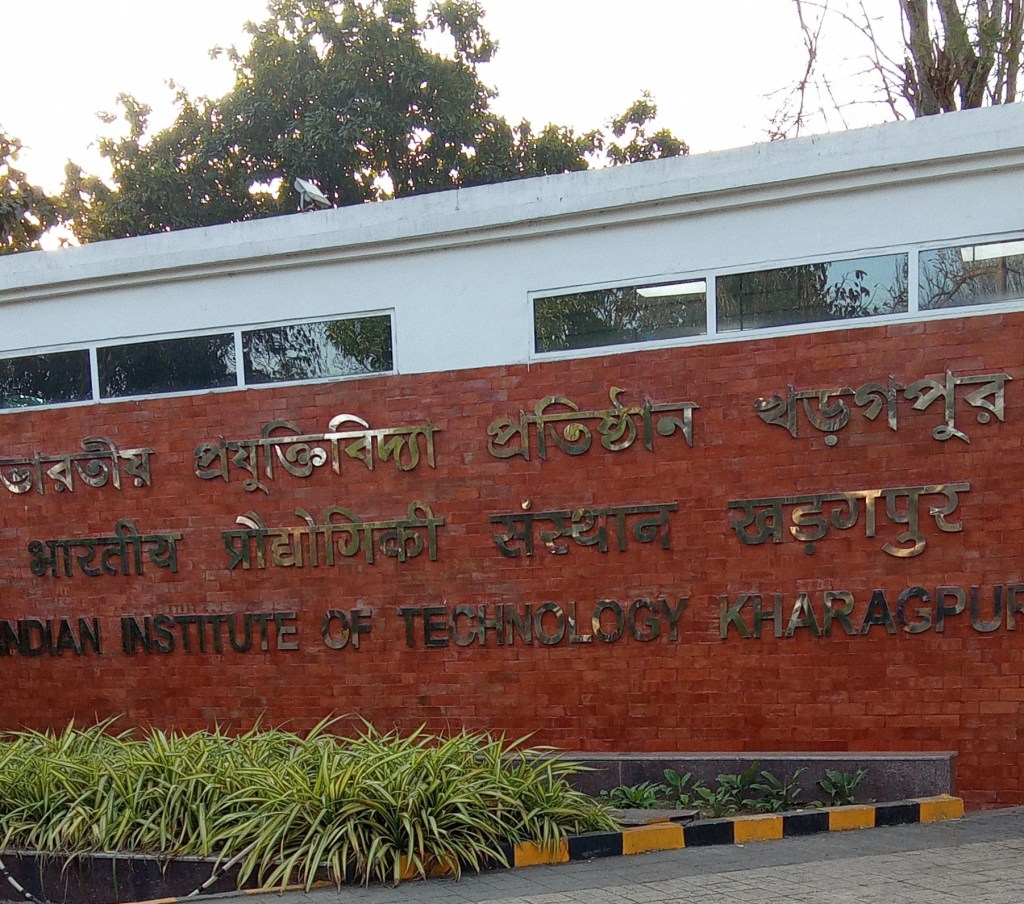
I recently had the opportunity to participate in a workshop held at the esteemed Indian Institute of Technology Kharagpur (IIT KGP). This workshop was part of the Continuing Education Program supported by the Indian government’s Scheme for Promotion of Academic and Research Collaboration (SPARC). It focused on topics such as polymer synthesis and carbon 2D materials, which align closely with my research interests.
I was filled with excitement as I made preparations for the workshop, anticipating it as an ideal platform for scholarly exchange and exploration. I looked forward to engaging in insightful discussions and networking opportunities that would enhance my understanding and expand my perspectives.
Highlights
The workshop commenced with a captivating overview of nanomaterials and nanocomposites in biomedical applications by Prof. Dipankar Chattopadhyay from the University of Calcutta. His elucidation of the diverse applications of nanomaterials, coupled with candid anecdotes from his academic journey, set the tone for an enriching experience.
Subsequent sessions featured illuminating presentations by industry stalwarts, offering invaluable insights into collaborative endeavors between academia and industry. Highlights included discussions on tyre-grade graphene development and elastomer nanocomposites tailored for high-performance applications, illuminating the fusion of academic research and real-world applications.
The crux of the workshop lay in the technical sessions, where experts delved into cutting-edge research domains.
The workshop featured standout speakers who offered valuable insights into various research areas. Professor N. Das discussed the application of small-angle X-ray scattering (SAXS) in functional polymers and polymer composites. His advocacy for the use of SAXS was particularly compelling, and during the break he even arranged a lab visit for me on the following day , providing an experience beyond the workshop sessions.
Additionally, during the plenary sessions, I had the opportunity to delve into new research areas, such as tungsten disulfide (WS2) nanotubes and diffusion ordered spectroscopy (DOSY) measurements using benchtop NMR. Exploring these topics expanded my knowledge base significantly.
Moreover, the presentation on RAFT Processes Under Temporal Controls by Prof. Greg G. Qiao was enlightening for me, as it introduced a new concept that I hadn’t encountered before. Engaging in discussions with Prof. Qiao about his latest research and experiences during the COVID-19 pandemic was a memorable highlight, showcasing the resilience of researchers in challenging times.
Although I cannot cover every aspect of the workshop, I was particularly impressed by the student researchers’ presentations. Among these, the exploration of shape memory behavior in a thermoplastic elastomer and efforts toward indigenous technology development in polymer nanocomposites for Type-IV hydrogen storage stood out.
Additionally, the poster session showcased works of great potential, further enriching the learning experience.
Meeting Expectations
The workshop exceeded my expectations by offering a comprehensive overview of current research trends and facilitating meaningful interactions with fellow participants. Participating in lively discussions and exchanging ideas during the poster session was intellectually stimulating. However, it was evident that there was a lack of participation from undergraduate and master’s level students, which could be an area for improvement in terms of inclusivity and broadening the workshop’s reach in the future.
Conclusion
Looking back on my workshop experience at IIT Kharagpur, I am grateful for the invaluable insights I gained and the connections I made. This experience has not only enriched my academic journey but also strengthened my dedication to advancing scientific understanding and promoting collaborative efforts. I eagerly look forward to future opportunities to explore further the frontiers of research and innovation, inspired by the profound impact of scholarly engagement.
 Personal Website
Leave a comment